
Introduction
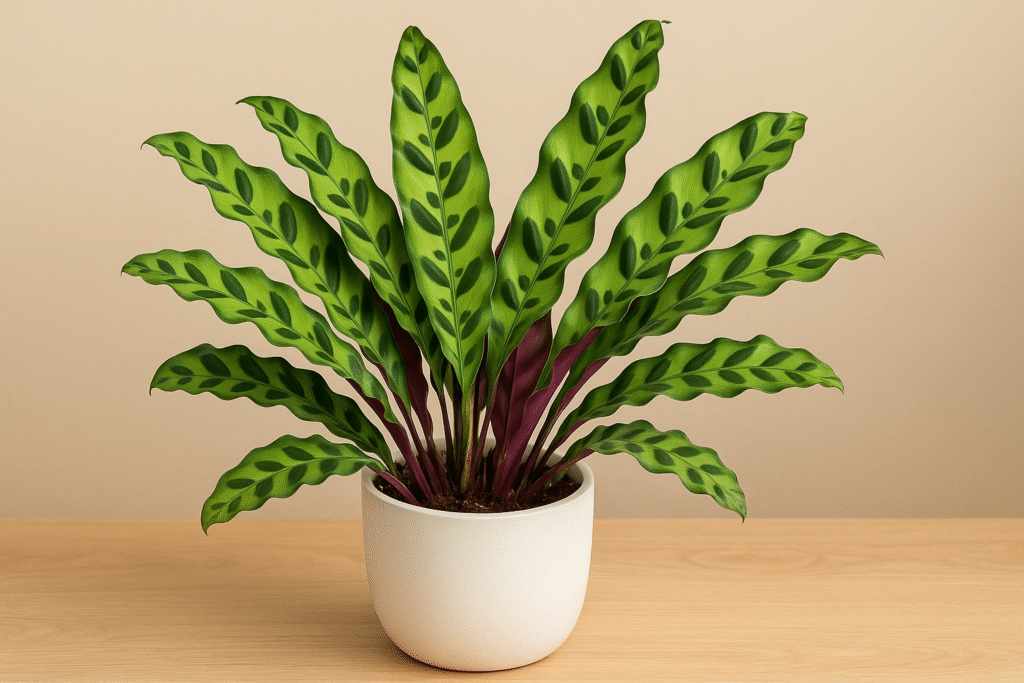
The Rattlesnake Plant (Calathea lancifolia) is one of the most stunning houseplants admired for its striking foliage and tropical charm. Native to the rainforests of Brazil, this plant belongs to the Marantaceae family, also known as the prayer plant family. It’s popular among indoor plant lovers for its long, wavy green leaves with deep purple undersides and intricate patterns that resemble the skin of a rattlesnake — hence the name!
This plant doesn’t just add a vibrant splash of green to your indoor space; it also helps purify the air, making your home fresher and healthier.
Appearance and Characteristics
The Rattlesnake Plant features narrow, elongated leaves with dark green spots that look like brush strokes. The underside of each leaf is a deep maroon-purple shade, creating a beautiful contrast. During the day, the leaves spread out to catch sunlight, and at night, they fold upward, mimicking hands in prayer — a unique trait of the Calathea family.
- Scientific Name: Calathea lancifolia
- Common Names: Rattlesnake Plant, Calathea Rattlesnake
- Native Region: Brazil (South America)
- Plant Type: Tropical evergreen perennial
- Mature Height: Up to 30 inches indoors
Ideal Growing Conditions
1. Light Requirements
Rattlesnake Plants thrive in bright, indirect light. Avoid direct sunlight, as it can scorch their delicate leaves and fade their vibrant patterns. A north or east-facing window is ideal. If the light is too low, growth may slow, and the colors may become dull.
2. Temperature
These tropical beauties prefer warm temperatures between 65°F to 80°F (18°C–27°C). Avoid cold drafts or sudden temperature changes. Never expose the plant to temperatures below 60°F (15°C).
3. Humidity
Rattlesnake Plants love high humidity (above 50%). In dry indoor air, the leaf tips may brown. To maintain humidity:
- Use a humidifier
- Place the pot on a pebble tray with water
- Group plants together to create a microclimate
Watering the Rattlesnake Plant
Watering is crucial for this plant’s health. Keep the soil consistently moist but not soggy. The Rattlesnake Plant dislikes both dryness and waterlogging.
Watering Tips:
- Water when the top 1 inch of soil feels slightly dry.
- Use filtered or rainwater, as this plant is sensitive to chemicals like fluoride or chlorine.
- Empty the saucer after watering to prevent root rot.
During the growing season (spring and summer), you’ll need to water more frequently than in fall and winter.
Soil and Potting Mix
The ideal soil for a Rattlesnake Plant should be well-draining yet moisture-retentive. A perfect mix is:
- 2 parts peat moss or coco coir
- 1 part perlite
- 1 part potting soil
This mixture allows air circulation while keeping enough moisture. Always use a pot with drainage holes to prevent root rot.
Fertilizing Your Plant
Feed your Rattlesnake Plant with a balanced liquid houseplant fertilizer (10-10-10) diluted to half strength every 4–6 weeks during spring and summer. Avoid fertilizing in winter when growth slows.
Over-fertilization can cause leaf burn, so it’s better to underfeed than overfeed.
Pruning and Maintenance
Pruning helps your plant stay healthy and attractive:
- Remove yellow or brown leaves regularly.
- Wipe leaves gently with a damp cloth to remove dust.
- Trim any damaged edges to encourage new growth.
You can also cut back older stems at the base to encourage fresh, vibrant leaves.
Propagation of Rattlesnake Plant
Propagation is best done through division during repotting in spring or early summer.
Steps:
- Remove the plant from its pot and gently separate the root clumps.
- Ensure each section has roots and leaves attached.
- Plant divisions in separate pots with fresh soil.
- Keep them warm and humid until new growth appears.
Avoid propagation through stem cuttings, as it rarely succeeds with Calatheas.
Repotting Guide
Repot your Rattlesnake Plant every 2–3 years or when roots start circling the pot. Choose a container that’s one size larger than the previous one.
Repotting rejuvenates the plant, provides fresh nutrients, and gives roots room to grow.
Common Problems and Solutions
| Problem | Cause | Solution |
|---|---|---|
| Brown leaf tips | Low humidity or tap water chemicals | Use filtered water, increase humidity |
| Yellow leaves | Overwatering or poor drainage | Let soil dry slightly, check drainage |
| Leaf curling | Underwatering or cold drafts | Water properly, maintain stable temperature |
| Faded colors | Too much direct sunlight | Move to bright, indirect light |
Regular monitoring and proper care will keep your plant looking lush and healthy.
Benefits of Rattlesnake Plant
- Air Purification: Removes toxins and improves indoor air quality.
- Non-Toxic to Pets: Safe for cats and dogs — perfect for pet owners.
- Decorative Appeal: Adds a bold tropical accent to any interior.
- Mood Booster: Its lush green foliage enhances relaxation and reduces stress.
Frequently Asked Questions (FAQs)
Q1: Why are the leaves of my Rattlesnake Plant curling?
A: Curling usually happens due to underwatering or cold air exposure. Ensure consistent moisture and keep it away from AC vents or drafts.
Q2: How often should I mist my Rattlesnake Plant?
A: Mist the leaves 2–3 times a week in dry environments or use a humidifier for better humidity control.
Q3: Can I keep my Rattlesnake Plant in the bathroom?
A: Yes! Bathrooms often have higher humidity, making them great for Rattlesnake Plants — as long as they receive some indirect light.
Q4: Is Rattlesnake Plant safe for pets?
A: Absolutely. It is non-toxic to cats and dogs, according to the ASPCA.
Q5: Why are the leaf edges turning brown?
A: Brown edges indicate low humidity or chemical buildup from tap water. Use filtered water and raise humidity levels.
Conclusion
The Rattlesnake Plant (Calathea lancifolia) is a true tropical gem — elegant, air-purifying, and pet-safe. Though it requires a bit of care and attention, the results are rewarding: striking patterned leaves that move with light changes and bring life to your indoor jungle.
Whether you’re a seasoned plant parent or a beginner, this plant adds vibrance and a touch of the rainforest to your home.