
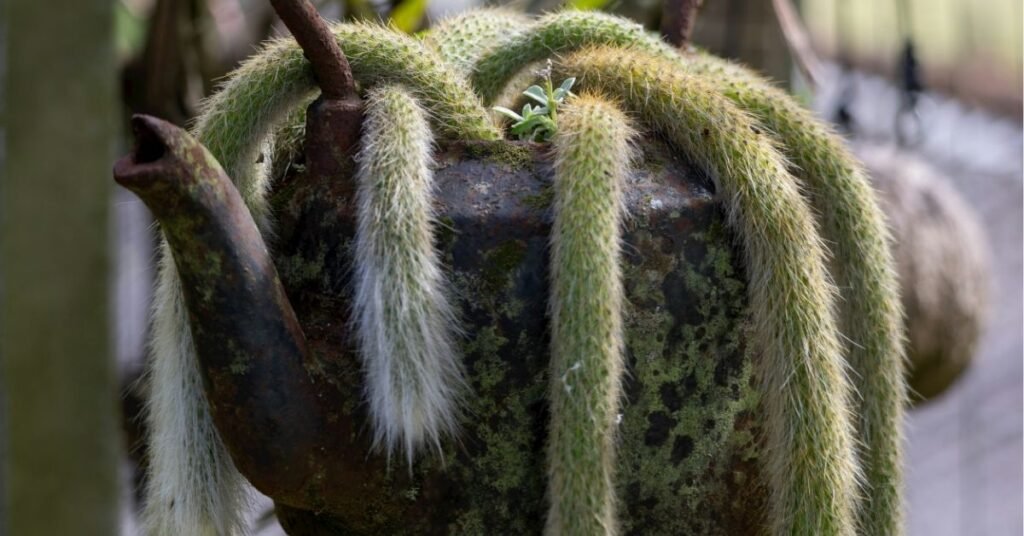
The Monkey Tail Cactus (Hildewintera colademononis), also known as Cleistocactus colademononis, is one of the most striking and unique cactus species in the world. Its long, trailing stems covered with soft, hair-like spines make it look exactly like a monkey’s tail, which is why this plant has gained huge popularity among plant lovers and indoor gardeners. Native to Bolivia, this cactus naturally grows on cliffs and rocky mountains, where its long stems hang beautifully downwards.
Today, the Monkey Tail Cactus is commonly kept as a decorative indoor plant, ideal for hanging baskets, sunny spots, and cactus collections. It is low-maintenance, drought-tolerant, and easy to grow, making it perfect even for beginners.
In this comprehensive guide, you will learn everything about Monkey Tail Cactus care, growth requirements, propagation, benefits, common problems, and expert tips to keep it healthy and thriving.
What Is the Monkey Tail Cactus?
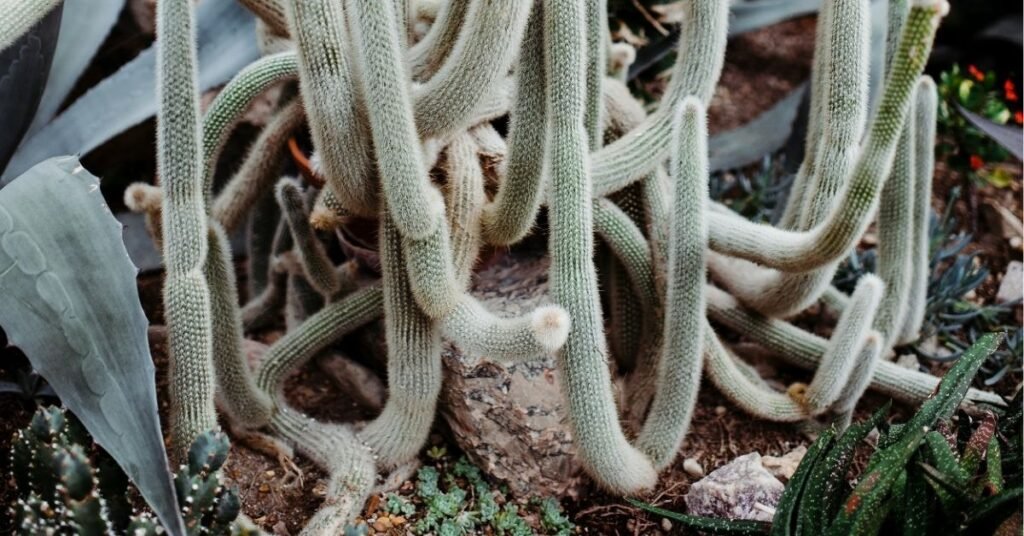
The Monkey Tail Cactus is a trailing, columnar cactus that can grow stems up to 8 feet (2.5 meters) long in its natural habitat. When grown indoors, the stems often reach 2 to 4 feet, depending on care. The stems are thick, cylindrical, and densely covered with soft white hairs that give it a fuzzy appearance.
It produces bright red to orange tubular flowers, followed by small red fruits. The flowers usually bloom during the warmer months and look stunning against the fuzzy stems.
Monkey Tail Cactus Plant Characteristics
1. Growth Habit
- Trailing/hanging cactus
- Perfect for hanging baskets or placing on high shelves
- Stems grow long and arch gracefully
2. Texture
- Soft, hair-like spines
- Looks fluffy but still should be handled gently
3. Flowers
- Bright red or orange
- Tubular in shape
- Attract pollinators (outdoors)
4. Longevity
- Long-lived plant with slow to moderate growth
Monkey Tail Cactus Care Guide
1. Light Requirements
Monkey Tail Cactus thrives in bright, indirect sunlight and can also handle direct morning sunlight.
For best growth:
- Provide 6–8 hours of bright light daily
- East or south-facing windows are ideal
- Outdoors, place in a lightly shaded but sunny area
Too little light causes weak, thin stems and slow growth.
2. Watering Needs
As a cactus, it requires minimal watering.
Follow this simple rule:
Water only when the soil is completely dry.
General watering guideline:
- Summer: Every 10–14 days
- Winter (dormant season): Every 3–4 weeks
Overwatering can lead to root rot, so always check the soil before watering.
3. Soil Requirements
Monkey Tail Cactus needs fast-draining soil.
Best soil types:
- Cactus/succulent mix
- Mix of 50% potting soil + 50% perlite/pumice
Good drainage prevents moisture buildup around the roots.
4. Temperature & Humidity
The plant prefers warm, dry conditions, similar to its desert origins.
- Ideal temperature: 21–32°C (70–90°F)
- Avoid temperatures below 5°C (40°F)
- Low humidity is perfect
It cannot tolerate frost, so bring it indoors during winter.
5. Fertilizer Requirements
Fertilize only during the growing season (spring and summer).
Use:
- Cactus fertilizer
- Or balanced liquid fertilizer diluted to half strength
Feed once every 4–6 weeks.
Avoid fertilizing in winter.
6. Potting & Repotting
Monkey Tail Cactus grows well in hanging pots.
Best pot types:
- Hanging baskets
- Clay or terracotta pots (reduce moisture)
Repot every 2–3 years or when the plant becomes root-bound.
7. Pruning
Pruning is rarely needed, but you may trim:
- Damaged stems
- Overgrown or tangled stems
Always use clean, sharp scissors.
8. Propagation Methods
Monkey Tail Cactus is easy to propagate.
a) Stem Cuttings
This is the most common method.
Steps:
- Cut a healthy stem using a sharp, clean blade.
- Let the cutting dry for 2–3 days to form a callus.
- Plant it in cactus soil.
- Water lightly after a week.
Roots usually develop within 3–5 weeks.
b) Propagation from Seeds
Slower method but still possible.
- Sow seeds in cactus soil
- Keep slightly moist
- Provide bright, indirect light
Seed growth may take several months.
Benefits of the Monkey Tail Cactus
1. Beautiful Décor Plant
Perfect for:
- Hanging baskets
- Window corners
- Vertical gardens
- Plant shelves
Its long, fuzzy stems create a striking visual effect.
2. Low-Maintenance
Requires minimal watering and care.
3. Long Lifespan
Once established, the plant can live many years.
4. Air Purification
Like other cacti, it helps improve air quality.
5. Easy Propagation
You can grow many new plants from a single mother plant.
Common Problems & Solutions
1. Root Rot
Cause: Overwatering
Solution:
- Cut off rotten roots
- Repot in dry soil
- Water less frequently
2. Sunburn
Cause: Too much harsh sunlight
Symptoms: Brown patches
Solution:
- Move to filtered light
- Avoid afternoon direct sun
3. Pests
Common pests include:
- Mealybugs
- Spider mites
Treatment: Neem oil spray or insecticidal soap.
4. Etiolation (Stretching)
Cause: Low light
Solution: Move plant to a brighter spot.
Tips for Keeping Monkey Tail Cactus Healthy
- Provide bright light for fastest growth
- Avoid overwatering
- Use a fast-draining cactus mix
- Keep in warm temperatures
- Do not mist the plant—it prefers dry air
- Rotate pot monthly for even growth
FAQs About Monkey Tail Cactus
1. Is Monkey Tail Cactus easy to care for?
Yes, it is very easy and suitable for beginners. It only needs bright light and occasional watering.
2. Why is my Monkey Tail Cactus turning yellow?
Yellowing is usually caused by overwatering or poor drainage.
3. Can Monkey Tail Cactus grow indoors?
Yes, it grows very well indoors when placed near bright windows.
4. How long do the stems grow?
Indoors: 2–4 feet
Outdoors: Up to 8 feet or more.
5. How often should I water it?
Water every 10–14 days in summer and once every 3–4 weeks in winter.
6. Does Monkey Tail Cactus bloom easily?
It blooms in warm, bright conditions. Older stems bloom more frequently.
7. Can I propagate it from a single stem?
Yes, stem propagation is very easy and highly successful.
8. Does it need humidity?
No, it grows best in dry environments.