
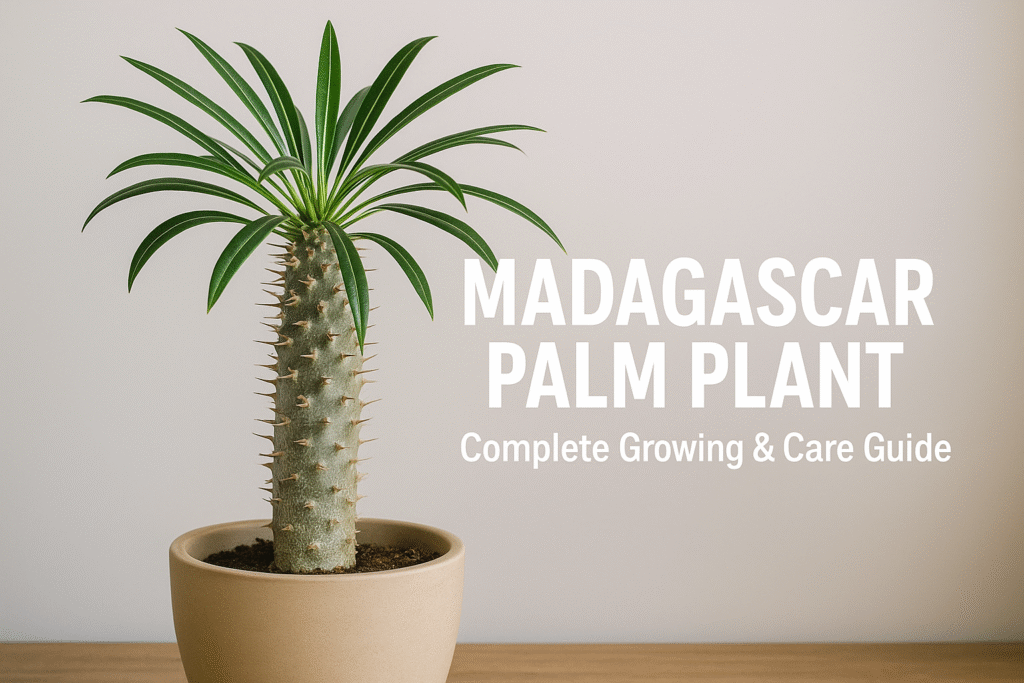
The Madagascar Palm (Pachypodium lamerei) is a unique indoor and outdoor ornamental plant known for its thick spiny trunk and elegant umbrella-shaped leaves. Although it looks like a palm, it actually belongs to the succulent family — meaning it stores water and requires low maintenance. Its exotic tropical appearance makes it a premium choice for modern homes, offices, and landscape gardens.
If you want to grow a hardy, drought-tolerant, and visually striking plant, the Madagascar Palm is a perfect choice. Below is a complete care guide for beginners and gardeners of all levels.
Key Features of Madagascar Palm
- Thick, cactus-like trunk with sharp thorns
- Crown of long, narrow green leaves
- Can grow up to 6–8 feet indoors and 20 feet outdoors
- Produces white, fragrant flowers in ideal outdoor conditions
- Extremely drought-tolerant
- Works well as a statement indoor plant
Best Growing Conditions

Light Requirements
Madagascar Palm loves bright, direct sunlight.
| Light Type | Ideal Duration |
|---|---|
| Direct Sunlight | 4–6 hours |
| Bright Indirect Light | 6–8 hours |
If kept indoors, place it near a south- or west-facing window. Lack of light can cause leaf drop and slower growth.
Tip: Gradually introduce it to direct sunlight to avoid leaf burn.
Temperature & Humidity
This plant thrives in warm climates.
| Condition | Ideal Range |
|---|---|
| Temperature | 18–32°C (65–90°F) |
| Humidity | Low to Medium |
Protect from frost & temperatures below 10°C (50°F). Cold stress can cause trunk rot and leaf drop.
Watering Schedule
Madagascar Palm needs less water than regular houseplants.
| Season | Watering Frequency |
|---|---|
| Spring & Summer | Once every 7–10 days |
| Winter & Fall | Once every 2–3 weeks |
Rule: Allow soil to dry completely before watering.
Signs of overwatering:
- Yellow, mushy leaves
- Soft spongy trunk
- Foul smell in soil
Signs of underwatering:
- Wrinkled trunk
- Brown crispy leaves
Soil Mix
Use a well-draining succulent/cactus mix.
Best Soil Recipe
- Cactus soil — 60%
- Perlite — 20%
- Sand — 20%
This prevents water-logging and root rot.
Fertilizing Guide
Use a balanced liquid fertilizer (10-10-10) during active growth.
| Season | Frequency |
|---|---|
| Spring & Summer | Every 4 weeks |
| Winter | ❌ Do not fertilize |
Avoid high-nitrogen fertilizers — they weaken the trunk and increase watering needs.
Repotting Instructions
Repot every 2 years or when roots appear from the bottom.
Steps:
- Choose a pot 2–3 inches wider
- Wear gloves — thorns are sharp
- Use a fast-draining soil mix
- Water lightly after repotting
Avoid burying the trunk too deep.
Propagation Method
Madagascar Palm is mainly propagated through seeds.
Seed Propagation
Cuttings are difficult and not recommended
Seed Germination Tips:
- Use warm environment (25–30°C)
- Keep soil slightly moist
- Provide bright light but avoid direct sun
Germination may take 3–6 weeks.
Common Problems & Solutions
| Problem | Cause | Solution |
|---|---|---|
| Leaves Dropping | Less light or cold weather | Move to warm, bright area |
| Yellow Leaves | Overwatering | Reduce watering, improve drainage |
| Brown Spots | Sunburn | Gradually increase sunlight |
| Wrinkled Trunk | Underwatering | Give deep watering |
Toxicity Warning
Madagascar Palm contains toxic sap.
- Keep away from pets & children
- Wear gloves while pruning or handling
Benefits of Growing Madagascar Palm
- Stylish modern look — great for decor
- Low-maintenance
- Air-purifying qualities
- Survives heat and drought
- Perfect for minimal & tropical-style homes
Ideal Placement Ideas
| Location | Recommendation |
|---|---|
| Indoors | Near sunny window, living room, hallway |
| Outdoors | Patio, balcony, sunny garden |
Conclusion
Madagascar Palm is a stunning, hardy, and beginner-friendly plant that adds a tropical touch to any space. With proper sunlight, well-draining soil, and a careful watering routine, this plant will grow beautifully and become a long-lasting centerpiece in your garden collection.
If you want a low-care plant that looks exotic and dramatic, this one should definitely be on your list!