
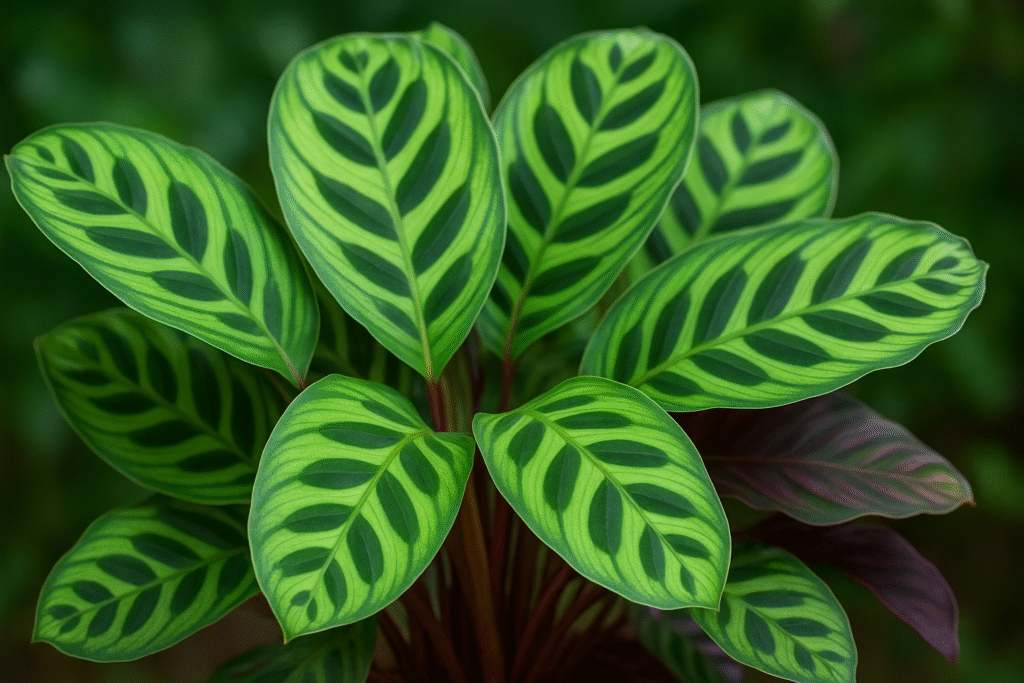
The Calathea plant is one of the most striking indoor plants, known for its decorative, patterned leaves that look like they’ve been hand-painted. Belonging to the Marantaceae family, Calatheas are native to the tropical rainforests of South America, particularly Brazil. With their bold, colorful foliage and unique ability to fold their leaves up at night, these plants have earned the nickname “prayer plants.”
In this article, we’ll explore everything you need to know about growing and caring for the Calathea plant, including its light, soil, water, and humidity needs — along with essential care tips to keep it lush and healthy.
What Is a Calathea Plant?
The Calathea is a genus of tropical plants prized for their ornamental leaves rather than their flowers. The leaves are often large, oval-shaped, and feature intricate patterns in shades of green, purple, pink, and cream. Their undersides are usually deep maroon or purple, adding a dramatic contrast.
One of the most fascinating traits of Calatheas is their nyctinasty — the daily movement where the leaves rise and close at night and open again in the morning. This behavior is due to light changes and helps reduce water loss.
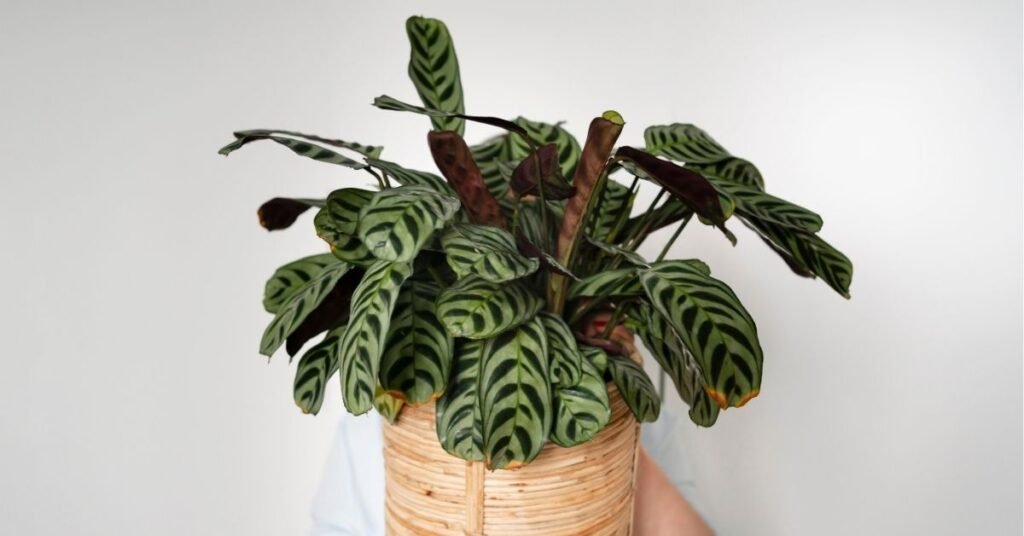
Popular Varieties of Calathea
There are many types of Calathea plants, each with its own unique leaf design and coloration. Here are some popular ones:
1. Calathea ornata (Pinstripe Calathea)
Known for its dark green leaves decorated with thin pink lines, giving the appearance of hand-painted pinstripes.
2. Calathea makoyana (Peacock Plant)
Features leaves patterned like peacock feathers — light green on top with dark green eye-shaped markings and purple undersides.
3. Calathea lancifolia (Rattlesnake Plant)
Long, narrow leaves with dark green spots and purple undersides — very easy to recognize and care for.
4. Calathea roseopicta (Rose Painted Calathea)
Displays round leaves with pinkish patterns in the center surrounded by deep green edges.
5. Calathea zebrina (Zebra Plant)
Boasts soft, velvety leaves with bright green stripes resembling zebra patterns.
Ideal Growing Conditions
To grow a Calathea plant successfully, it’s important to replicate its natural tropical environment. Here’s what it needs:
Light Requirements
Calatheas thrive in bright, indirect light. Direct sunlight can scorch the leaves and fade their beautiful patterns. They also grow well in medium light or dappled shade, making them perfect for indoor spaces.
Temperature
They prefer warm temperatures between 65°F and 80°F (18°C to 27°C). Avoid placing them near cold drafts, air conditioners, or heating vents.
Humidity
Calatheas love humidity — ideally around 60% or higher. If the air is dry, mist the plant regularly, use a humidifier, or place the pot on a pebble tray with water to maintain moisture.
Soil
Use a well-draining, rich, and airy soil mix. A blend of potting soil, peat moss, and perlite is ideal. The soil should retain moisture without becoming soggy.
Watering
Calathea plants prefer consistently moist soil but not waterlogged. Water when the top inch of soil feels dry. Always use filtered or rainwater if possible, as Calatheas are sensitive to chlorine and fluoride in tap water.
Fertilizing the Calathea
Feed your Calathea plant with a balanced liquid fertilizer (like 10-10-10) once a month during the growing season (spring and summer). Avoid fertilizing in fall and winter when growth slows down. Always dilute fertilizer to half strength to prevent root burn.
Pruning and Maintenance
Pruning helps maintain the plant’s shape and encourages new growth. Remove yellow or brown leaves promptly to improve the plant’s appearance and airflow.
Regularly clean the leaves with a soft, damp cloth to remove dust — this helps the plant absorb more light and keeps the foliage glossy.
Repot your Calathea every 1–2 years in fresh soil to replenish nutrients and allow root expansion.
Propagation of Calathea
Calatheas are best propagated through division rather than cuttings. Here’s how you can do it:
- Remove the plant gently from its pot during repotting.
- Separate the roots into smaller clumps — each should have at least one healthy shoot and root system.
- Replant each section in its own pot with fresh soil.
- Keep the soil moist and maintain high humidity until new growth appears.
Propagation is easiest in spring or early summer when the plant is actively growing.
Common Problems and Their Solutions
Like most tropical plants, Calatheas can face a few common issues:
1. Curling Leaves
This often indicates low humidity or underwatering. Mist regularly and ensure the soil stays slightly moist.
2. Yellow Leaves
Can result from overwatering or poor drainage. Always check that your pot has drainage holes.
3. Brown Leaf Tips
Usually caused by dry air or tap water with chemicals. Switch to filtered water and increase humidity.
4. Pests
Spider mites, aphids, and mealybugs can occasionally attack Calatheas. Wipe leaves with neem oil or insecticidal soap to control infestations.
Benefits of Calathea Plants
- Air Purification: Calatheas help purify indoor air by removing toxins.
- Pet Safe: Non-toxic to cats and dogs, making them safe for pet owners.
- Decorative Appeal: Their bold patterns and vibrant leaves enhance any room’s aesthetic.
- Mood Booster: Studies show plants like Calathea can improve mental well-being and indoor air quality.
Overwintering and Seasonal Care
Calatheas are sensitive to cold. During winter, keep them away from cold drafts and reduce watering slightly. Maintain humidity levels and ensure temperatures don’t drop below 60°F (15°C). Resume normal care in spring as new growth begins.
Conclusion
The Calathea plant is truly a masterpiece of nature — a living artwork that brings life and color to your home. With its vibrant leaves, tropical charm, and minimal maintenance requirements, it’s no wonder Calatheas have become one of the most popular indoor plants worldwide.
By providing proper light, humidity, and watering, you can enjoy the lush beauty of this tropical treasure all year long. Whether it’s the Zebra, Peacock, or Pinstripe variety, every Calathea promises to transform your indoor space into a peaceful, green sanctuary.