
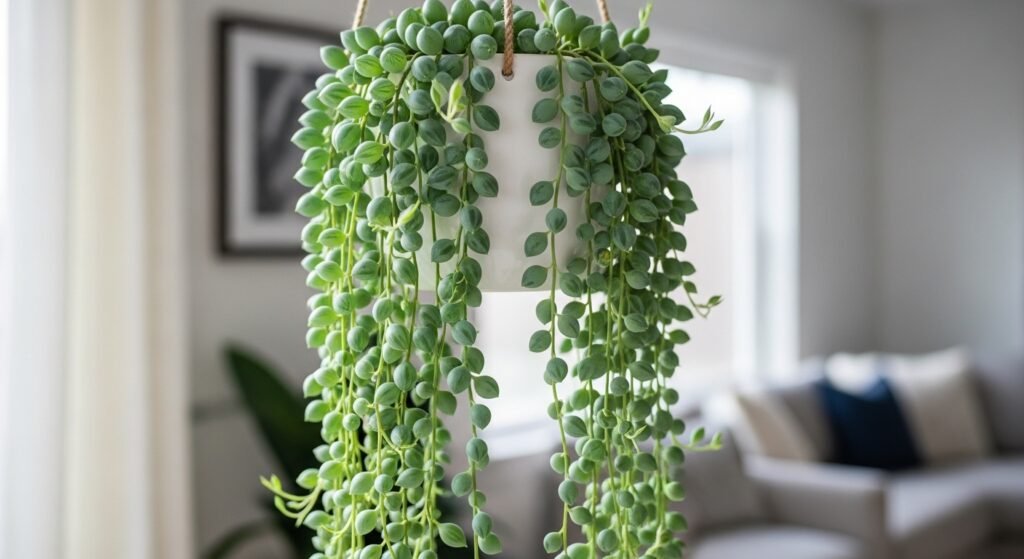
The String of Tears Plant, scientifically known as Senecio herreanus, is one of the most unique and eye-catching trailing succulents. Its teardrop-shaped leaves, elegant cascading growth habit, and low-maintenance nature make it a favorite among indoor plant lovers. Whether you are a beginner or an experienced plant parent, this plant brings a beautiful charm to any space.
In this article, you will learn everything about the String of Tears Plant — its origin, appearance, care requirements, watering schedule, propagation methods, common issues, and overall best practices to keep it thriving.
What Is String of Tears Plant?
String of Tears is a succulent vine native to Namibia in southern Africa. It grows in dry climates and rocky terrains, making it extremely drought-tolerant. Its leaves resemble tiny elongated teardrops—hence the name “String of Tears.” These leaves help the plant store water during dry periods, allowing it to survive harsh conditions.
It belongs to the same family as the famous String of Pearls, String of Bananas, and String of Dolphins, but it has a distinct shape that makes it more attractive and slightly easier to care for.
Appearance & Growth Pattern
The String of Tears Plant features small, elongated leaves shaped like tiny drops that grow along thin, delicate stems. The leaves usually have:
- A teardrop or oval shape
- Light green to bluish-green color
- Slight transparent window-like lines on the surface (for sunlight absorption)
- A glossy appearance when healthy
Stems can grow up to 2–3 feet long, making the plant ideal for:
- Hanging baskets
- High shelves
- Macramé plant hangers
- Window ledges
This trailing effect creates a stunning visual display, especially when the vines grow thick and dense.
Light Requirements
Light is one of the most important factors in keeping the String of Tears Plant healthy.
Best Light Conditions:
- Bright, indirect sunlight for 4–6 hours a day
- Filtered light near a window
- Indoor placement near east or west-facing windows
Avoid:
- Harsh direct sunlight for long hours (leaves may burn)
- Very low light (plant becomes leggy and weak)
If natural light is insufficient, a grow light can help maintain healthy growth.
Watering Requirements
The String of Tears is a succulent, so it stores water in its leaves. Overwatering is the most common reason for root rot and plant death.
How to Water Properly:
- Allow soil to dry out completely between waterings.
- Water thoroughly until water drains from the bottom.
- Empty the saucer to avoid standing water.
Watering Schedule (General Guide):
- Summer: Every 10–14 days
- Winter: Every 3–4 weeks (very little water)
- Rainy/Humid weather: Water less often
Always adjust based on your room temperature, pot size, and soil dryness.
Soil Requirements
The right soil mix ensures proper drainage, which is essential for succulents.
Ideal Soil Mix:
Use a fast-draining, airy mix such as:
- 50% cactus/succulent soil
- 30% perlite or pumice
- 20% coarse sand
This prevents waterlogging and keeps roots healthy.
Temperature & Humidity
String of Tears thrives in warm, dry environments.
Best Temperature Range:
- 18°C to 27°C (65°F to 80°F)
Humidity:
- Prefers low to moderate humidity
- Avoid placing near humidifiers or kitchens with steam
It is not frost-tolerant, so protect it from cold drafts and winter temperatures below 10°C (50°F).
Fertilizing
While String of Tears doesn’t require heavy feeding, a little fertilizer helps boost growth.
Recommended Fertilizer Routine:
- Use a diluted succulent fertilizer once every 4–6 weeks during spring and summer.
- Do not fertilize during winter (plant is dormant).
Over-fertilizing can damage roots, so always apply lightly.
Pruning & Maintenance
Pruning helps the plant grow fuller and prevents leggy stems.
How to Prune:
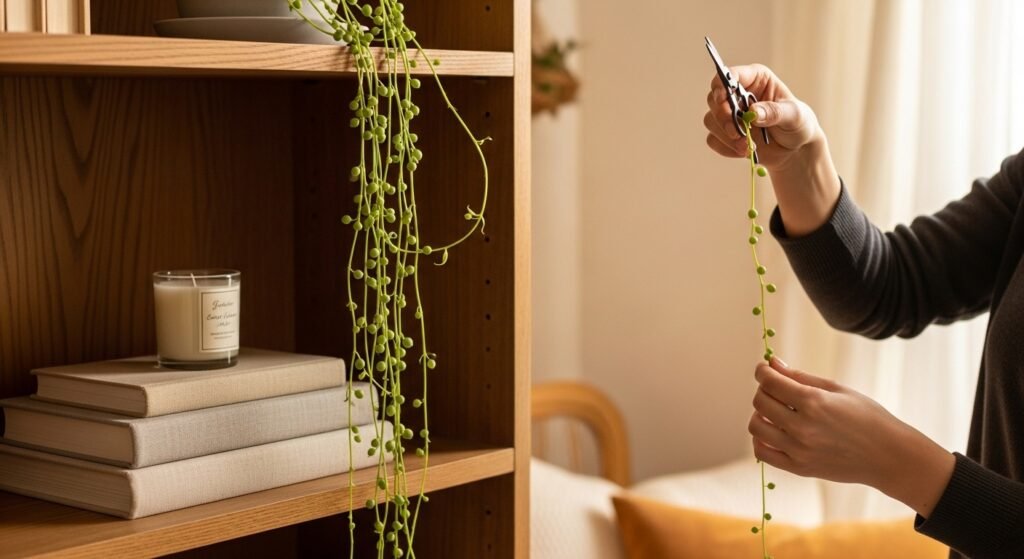
- Use clean scissors to trim long or unhealthy vines
- Prune during the growing season (spring/summer)
- Remove dry or yellow leaves regularly
Pruned vines can be used for propagation.
Propagation
String of Tears is very easy to propagate, making it perfect for creating more plants.
Propagation Methods:
1. Stem Cuttings
- Cut a healthy vine 3–5 inches long
- Remove bottom leaves
- Place the cutting on top of moist soil
- Keep in bright, indirect light
- Roots develop in 2–3 weeks
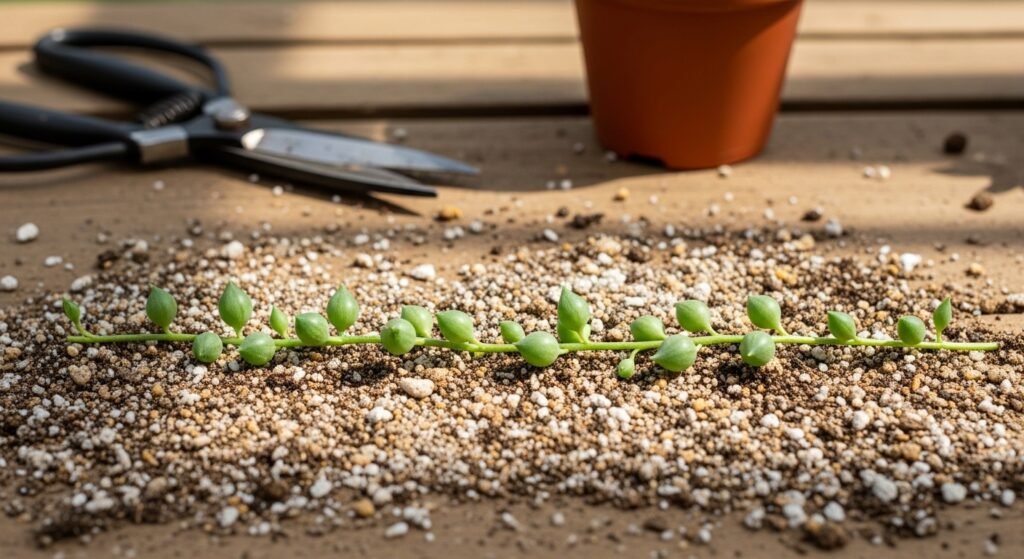
2. Direct Soil Method
- Lay the entire cutting flat on the soil
- Each leaf node will develop roots
- Best for fuller growth
3. Water Propagation
- Place the stem cutting in water
- Keep only the node submerged
- Transfer to soil once roots appear
Propagation works best in spring and early summer.
Common Problems & Solutions
1. Leaves Shriveling
Cause: Underwatering
Solution: Water thoroughly and increase frequency slightly.
2. Mushy or Transparent Leaves
Cause: Overwatering
Solution: Let soil dry completely; improve drainage.
3. Leggy Stems
Cause: Low light
Solution: Move plant to a brighter spot.
4. Yellowing Leaves
Cause: Watering issues or poor soil drainage
Solution: Adjust watering schedule or repot in proper soil mix.
5. Root Rot
Cause: Constantly wet soil
Solution: Remove rotted roots and repot in dry, airy soil.
Where to Place String of Tears Indoors
This plant looks beautiful in:
- Living rooms near a bright window
- Bedrooms with indirect sunlight
- Study tables with hanging baskets
- Bathrooms with good ventilation and moderate light
Its elegant cascading vines add life and style to any interior.
Is String of Tears Safe for Pets?
Like many succulents from the Senecio family, String of Tears is mildly toxic if eaten by pets.
Keep away from cats and dogs to prevent digestive irritation.
Conclusion
The String of Tears Plant is a stylish, low-maintenance, and rewarding succulent that fits perfectly into modern homes. With its distinctive teardrop leaves and trailing growth, it brings an artistic, natural touch to any room. As long as you provide bright light, proper watering, and a well-draining soil mix, this plant will grow beautifully and stay healthy for years.