
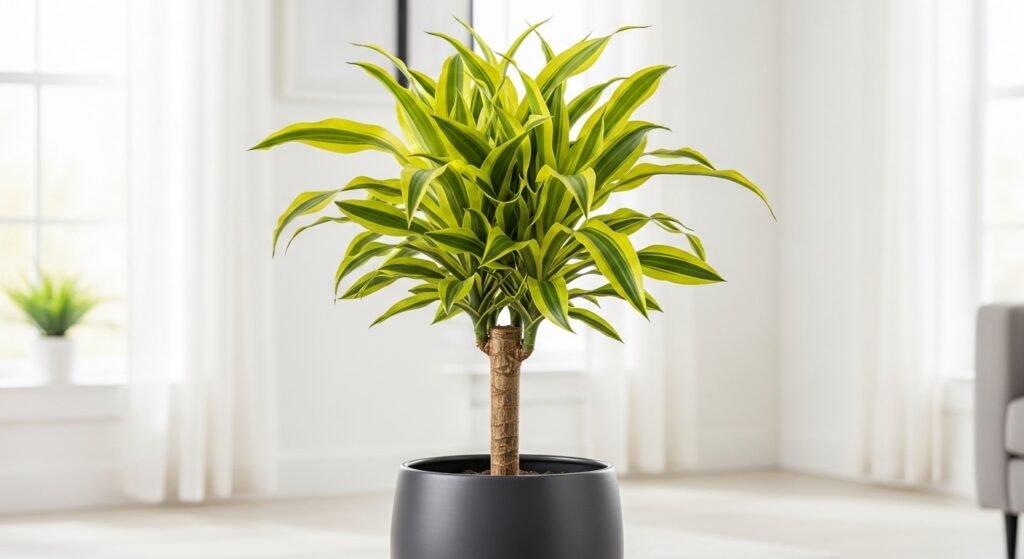
The Dracaena Lemon Lime Plant is one of the most visually striking indoor plants, admired for its vivid stripes of lime-green, dark-green, and creamy white. Native to tropical Africa, this cultivar of Dracaena fragrans is loved by both beginner and expert plant owners for its adaptability and low-maintenance nature. With proper care, it can reach several feet in height and fill your room with a refreshing, tropical charm.
Origin and Overview
The Dracaena Lemon Lime belongs to the Asparagaceae family. It naturally grows in humid, shaded forests where it thrives in filtered light. Indoors, it is often cultivated for its dramatic foliage and easygoing temperament. Mature plants develop woody stems topped with rosettes of long, sword-shaped leaves, each leaf showcasing a mix of chartreuse, lime, and deep-green stripes.
Because of its hardiness and tolerance to irregular watering, this plant is considered one of the best indoor companions for people who want greenery without the constant effort.
Appearance and Growth Habit
The Lemon Lime variety is easily distinguished from other Dracaenas by its colorful leaves, which can grow up to two feet long and about two inches wide. The growth pattern is upright and cane-like; new leaves emerge from the top, while older ones gradually fall off, revealing the stem.
When grown indoors, it usually reaches four to six feet tall. With proper pruning, it can be shaped into a compact table plant or allowed to grow tall as a floor specimen.
Light Requirements
Light plays a vital role in keeping the leaves vibrant. The plant prefers bright, indirect sunlight—too much direct exposure can bleach or burn the leaves, while low light causes dull coloring and slower growth.
Ideal spots include:
- Near east- or north-facing windows
- Several feet away from a bright south- or west-facing window
- Under fluorescent or LED grow lights in offices
Rotate the pot every few weeks so all sides receive even light and the plant grows straight.
Watering Routine
Dracaenas dislike sitting in soggy soil. The best approach is to water thoroughly and then allow the upper two inches of soil to dry out before the next watering. Overwatering is the most common cause of failure, leading to root rot and yellowing leaves.
Watering tips:
- Always check moisture with your finger before watering.
- Use room-temperature water that’s been left out overnight to dissipate chlorine.
- Ensure the pot has drainage holes.
During winter, the plant’s growth slows down, so reduce watering frequency.
Soil and Potting
Use a well-draining potting mix that retains some moisture but never becomes compacted. A simple mixture includes equal parts of:
- General indoor potting soil
- Perlite or pumice for aeration
- Peat moss or coco coir for moisture retention
Repot every two to three years, ideally in spring. Choose a pot one size larger to encourage healthy root expansion. When repotting, gently loosen old soil around the roots and inspect for rot.
Temperature and Humidity
As a tropical species, the Dracaena Lemon Lime enjoys warmth and moderate humidity.
- Optimal temperature: 65 – 80 °F (18 – 27 °C)
- Minimum tolerated: around 55 °F (13 °C)
Avoid sudden drafts, cold air from air conditioners, or hot air from heaters. If your home is dry, mist the leaves occasionally, use a humidifier, or set the pot on a tray filled with pebbles and water.
Fertilizing
Feed the plant with a balanced liquid fertilizer (for example, 10-10-10) once a month during spring and summer. Always dilute to half the recommended strength. Excess fertilizer can lead to salt buildup and leaf burn.
During autumn and winter, withhold feeding as the plant naturally slows its growth.
Pruning and Cleaning
Pruning keeps the plant looking tidy and prevents legginess. Remove yellow, brown, or damaged leaves with clean scissors. If the plant becomes too tall, cut back the cane to your preferred height. New shoots will sprout just below the cut.
Dust can block light and clog pores, so wipe the leaves gently with a damp cloth once every two weeks. This simple habit also enhances their glossy look.
Propagation
Propagation by stem cuttings is easy and rewarding.
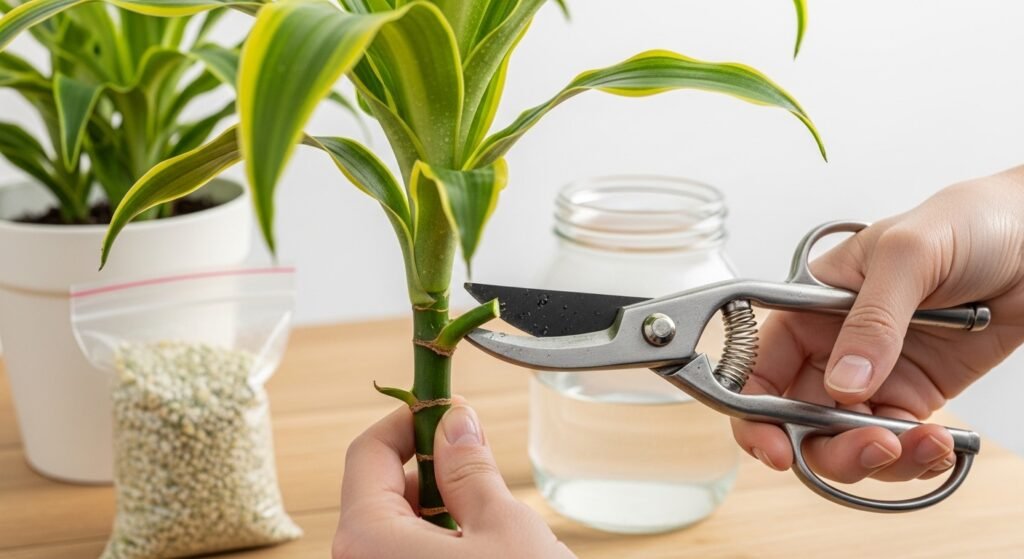
Steps:
- Using sterilized shears, cut a healthy cane about 6 – 8 inches long.
- Remove leaves from the lower portion.
- Place the cutting in water or directly into moist potting soil.
- Keep it in a warm, bright place away from direct sunlight.
- Roots will appear in about 3 – 4 weeks.
Once established, transplant into a small pot with fresh soil and continue normal care.
Repotting Process
When roots start circling the bottom of the container or poke through drainage holes, it’s time to repot.
- Select a pot roughly 2 inches wider than the current one.
- Partially fill it with fresh mix.
- Lift the plant carefully, supporting the root ball.
- Position it in the new pot and fill around with soil.
- Water lightly and return to its usual bright spot.
Repotting rejuvenates the plant and encourages stronger growth.
Common Problems and Solutions
| Problem | Likely Cause | Quick Fix |
|---|---|---|
| Brown leaf tips | Fluoride or chlorine in water | Use filtered or rainwater |
| Yellowing leaves | Overwatering | Let soil dry between waterings |
| Drooping leaves | Underwatering or cold | Adjust watering, keep warm |
| Faded colors | Low light | Move to brighter area |
| Slow growth | Nutrient deficiency | Apply diluted fertilizer monthly |
Regularly checking for these signs helps keep your plant healthy year-round.
Pests and Diseases
Although generally resistant, Dracaenas can attract common indoor pests like spider mites, mealybugs, and scale insects.
Prevention and treatment:
- Inspect the undersides of leaves regularly.
- Wipe with neem-oil spray or mild soapy water.
- Keep foliage clean and avoid overly damp conditions.
Root rot is the most serious disease, almost always caused by overwatering. Ensure proper drainage to prevent it.
Toxicity to Pets
All Dracaena species contain saponins, compounds that are toxic to cats and dogs when ingested. Symptoms include vomiting, drooling, and lethargy. Keep the plant out of pets’ reach or place it in hanging planters if you have curious animals.
Benefits of Dracaena Lemon Lime
- Air Purification – Removes harmful indoor toxins such as benzene, trichloroethylene, and formaldehyde.
- Aesthetic Appeal – The striped lime and dark green leaves brighten dull spaces.
- Low Maintenance – Perfect for busy plant parents.
- Stress Reduction – Greenery is known to enhance mood and productivity.
- Longevity – With care, it can thrive for many years indoors.
Styling Ideas
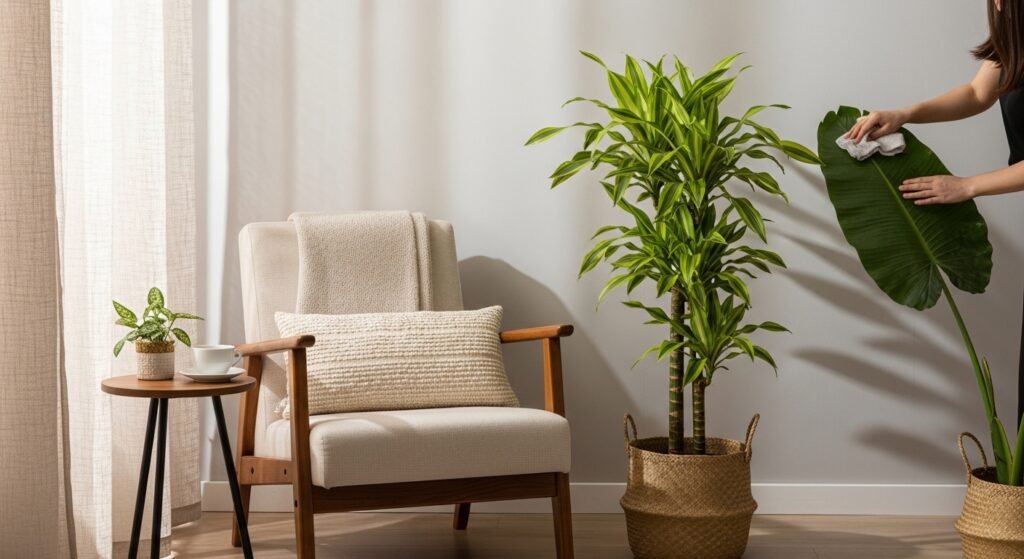
The Dracaena Lemon Lime complements almost every décor theme:
- Place a tall specimen beside a sofa or desk to add a vertical accent.
- Use decorative ceramic pots in white or charcoal to contrast with the lime foliage.
- Group with other tropical plants like Peace Lily or ZZ Plant for a lush indoor jungle vibe.
Good lighting and occasional rotation will keep its form symmetrical and leaves glowing.
Seasonal Care Tips
Spring and Summer
- Encourage growth with monthly feeding.
- Repot if roots are crowded.
- Maintain regular watering schedule.
Fall and Winter
- Reduce watering frequency.
- Keep away from cold drafts.
- Stop fertilizing until temperatures rise again.
Maintaining these seasonal adjustments ensures consistent growth year after year.
Frequently Asked Questions
1. How often should I water the plant?
About once a week, or whenever the top couple of inches of soil feel dry.
2. Can it survive in low light?
Yes, but the leaf colors may dull. For the brightest stripes, place it in bright, filtered light.
3. Why are my leaves curling or drooping?
Usually underwatering, low humidity, or cold air. Correct these conditions and the leaves will recover.
4. Can I grow it outdoors?
In tropical or subtropical climates, yes—but protect it from direct sun and frost.
5. When should I prune?
Any time of year if stems grow too tall or leaves turn yellow.
6. How do I make it bushier?
Cut the top of the cane; multiple new shoots will emerge from the cut point.
7. Is it safe for pets?
No, it’s mildly toxic to cats and dogs. Keep out of reach.
Conclusion
The Dracaena Lemon Lime Plant is a timeless favorite among houseplant lovers for its radiant foliage, easy care, and air-purifying ability. Whether you’re decorating an office corner or brightening your living room, this plant adds a burst of life with minimal effort.
By providing the right balance of light, water, and warmth, your Dracaena will reward you with years of vibrant color and fresh energy indoors.