
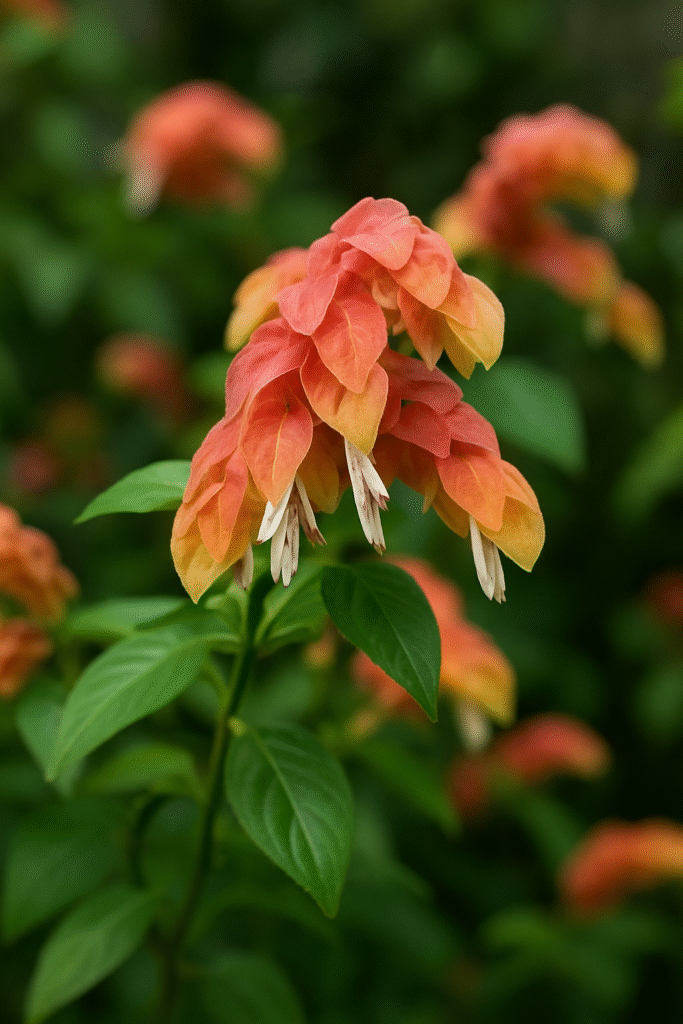
The Shrimp Plant (Justicia brandegeeana) is one of the most fascinating ornamental plants loved for its unique shrimp-shaped bracts and evergreen foliage. Its soft drooping bracts in shades of copper, yellow, pink, and red closely resemble prawns or shrimp — giving the plant its famous name. With tropical elegance and year-round blooming power, this plant is a favorite of gardeners, indoor plant lovers, and landscapers around the world.
Belonging to the Acanthaceae family and native to Mexico, the Shrimp Plant performs well in warm climates and moderate humidity. Whether you grow it indoors as a decorative pot plant or outdoors in your garden, this plant is extremely easy to care for and rewards you with continuous blooms.
If you love plants with exotic beauty but don’t want to deal with complicated care routines, the Shrimp Plant is the perfect choice. This guide covers everything you need to know — soil, watering, sunlight, fertilizing, pruning, propagation, common problems, and FAQs.
Why Shrimp Plant is So Popular?
- Stunning shrimp-shaped bracts
- Long blooming season
- Easy care & low-maintenance
- Attracts butterflies & hummingbirds
- Ideal for pots, patios & tropical gardens
- Evergreen foliage for year-round beauty
Its unique flower bracts never fail to catch attention, and gardeners love how well it thrives with minimal effort.
Ideal Growing Conditions
Light Requirements
Shrimp Plant thrives in bright, indirect light.
4–6 hours of filtered sunlight
East or south-facing window for indoor growth
Avoid harsh afternoon sun (leaf burn risk)
If light is too low, the plant becomes leggy and blooms less.
Soil Requirements
The plant prefers fertile, airy, and well-draining soil.
Best Soil Mix:
- 40% potting soil
- 30% coco peat or compost
- 30% perlite or sand
pH between 6.0 and 7.0 works best.
Watering Guide
Shrimp Plant enjoys evenly moist soil — not soggy, not dry.
Water when top 1–2 inches of soil dries
Increase watering in summer
Avoid stagnant water to prevent root rot
In winter, reduce watering frequency.
Temperature & Humidity
Ideal Temperature: 18–30°C
Humidity: 50–70%
Mist leaves occasionally or use a humidity tray if indoor air is dry.
Fertilization
Feed regularly during the growing season for maximum blooms.
Recommended Fertilizers:
- Balanced liquid fertilizer (10-10-10) every 2–3 weeks
- Organic compost
- Seaweed or fish emulsion
Stop heavy feeding in winter months.
Pruning & Maintenance
Shrimp Plant can grow leggy if left untrimmed.
Prune lightly after blooming
Remove brown & dead leaves
Pinch growing tips to make plant bushier
Regular trimming encourages fresh blooms and compact growth.
Propagation
Shrimp Plant is very easy to propagate through stem cuttings.
Propagation Steps
- Take 4–6 inch stem cutting
- Remove lower leaves
- Dip in rooting hormone (optional)
- Plant in moist soil mix or water
- Keep in bright, indirect light
Roots appear in 2–3 weeks and new shoots shortly after.
Pests & Diseases
Common pests include:
- Spider mites
- Aphids
- Whiteflies
Solution: Spray neem oil weekly.
Most diseases result from overwatering — ensure good drainage to avoid root rot and fungal issues.
Repotting Guide
Repot the Shrimp Plant every 1–2 years or when roots outgrow the pot.
Repot in spring
Choose a pot 2 inches larger
Refresh soil for healthy growth
Best Placement Ideas
Outdoors:
- Partially shaded garden beds
- Patio corners
- Tropical landscapes
Indoors:
- Near east or south windows
- Living room corners
- Bright balconies
Combine with hibiscus, crotons, and bougainvillea for a tropical garden look.
Benefits of Shrimp Plant
- Unique decorative blooms
- Year-round greenery
- Improves indoor visual appeal
- Pet-friendly and non-toxic
- Supports pollinators like butterflies & hummingbirds
Frequently Asked Questions (FAQs)
1. Is Shrimp Plant easy to care for?
Yes, it is very easy to grow and suitable even for beginners.
2. Does Shrimp Plant bloom all year?
In tropical climates, it can bloom nearly year-round. Indoors, it blooms mainly in spring and summer.
3. Can Shrimp Plant grow indoors?
Absolutely! Place it near bright windows with indirect light and good humidity.
4. How often should I water?
Water when top soil becomes dry. Do not keep soil soggy.
5. Why do leaves turn yellow?
Overwatering and poor drainage are common causes.
6. Best fertilizer for Shrimp Plant?
Use balanced liquid fertilizer 10-10-10 every 2–3 weeks in growing season.
7. Does it need pruning?
Yes, pruning keeps the plant bushy and increases blooming.
8. Can Shrimp Plant survive full sun?
Mild morning sun is fine, but avoid strong midday sun.
9. How to propagate Shrimp Plant?
Through stem cuttings — roots develop in about 2–3 weeks.
10. Is Shrimp Plant toxic?
No, it is non-toxic and safe for pets and children.
Conclusion
The Shrimp Plant is a truly special ornamental plant that combines beauty, uniqueness, and ease of care. With good light, regular watering, and occasional pruning, this plant will reward you with constant shrimp-shaped blooms and lush greenery. It adds a tropical charm to patios, balconies, and indoor corners — making it a perfect choice for home gardeners and plant lovers.
Whether you’re a beginner or an experienced plant enthusiast, growing a Shrimp Plant will bring both beauty and joy to your space. With year-round color and minimum demands, it truly earns its place among the most admired ornamental plants.